

Great Crested Newt Surveys
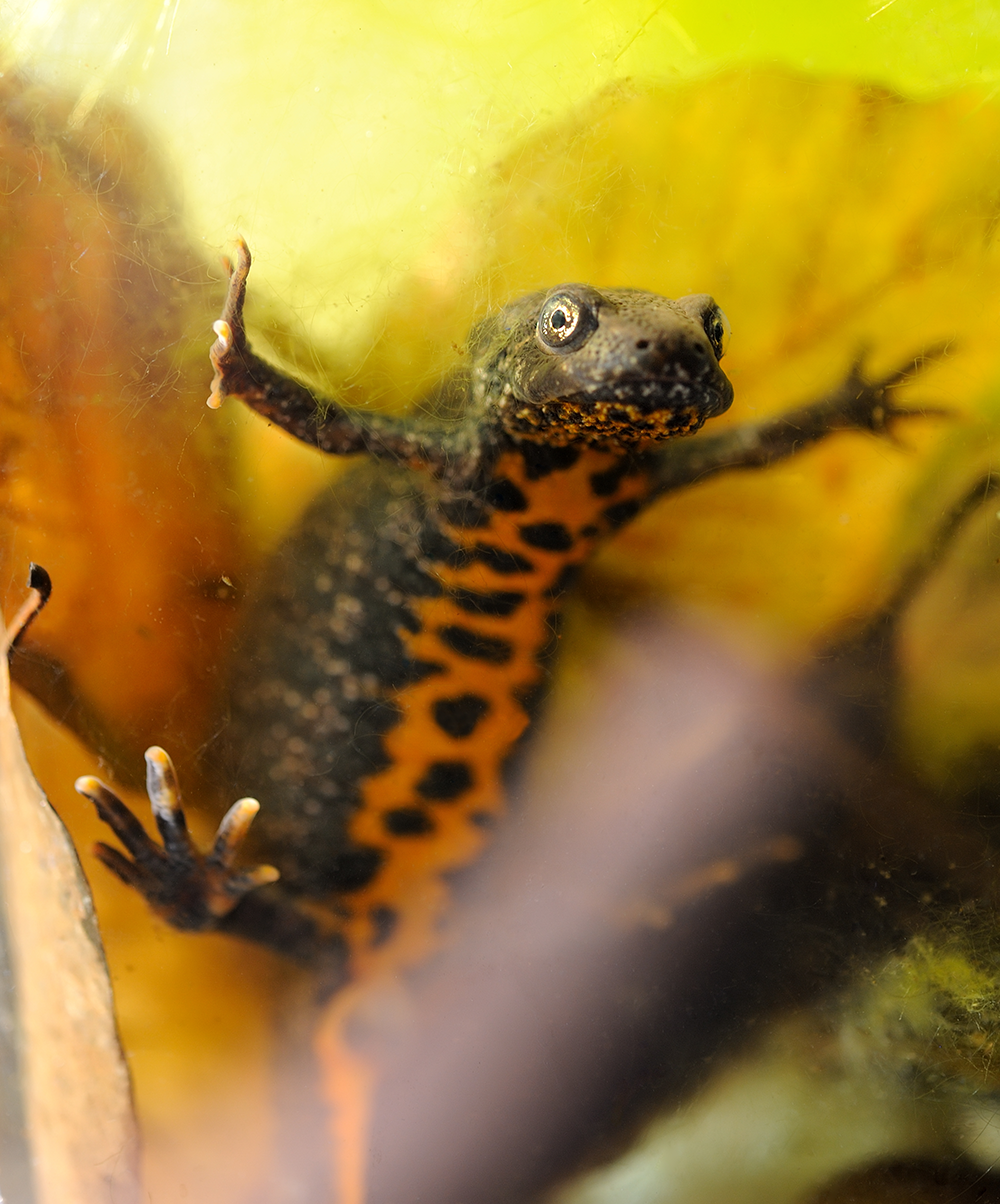
Great crested newts are protected under the Wildlife and Countryside Act 1981 (as amended) and the Conservation of Habitats and Species Regulations 2017 (as amended).
It is an offence to deliberately capture, injure or kill a great crested newt, or to damage or destroy a breeding site or resting place. As a result, development proposals that have the potential to affect great crested newts or their habitats may require ecological surveys to support planning applications and ensure compliance with wildlife legislation.
Great crested newts are commonly associated with ponds, but may also be found within surrounding terrestrial habitats including rough grassland, scrub, woodland, hedgerows and gardens. As a result, they can be a consideration for a wide range of development projects.
What Do Great Crested Newt Surveys Involve?
The type of survey required will depend on the site, proposed works and local planning requirements.
Surveys may include:
- Habitat Suitability Index (HSI) assessments.
- Environmental DNA (eDNA) surveys.
- Presence/absence surveys.
- Population size class assessments.
Survey findings help determine whether great crested newts are present and identify any measures required to avoid or minimise impacts.
Mitigation and Licensing
Where impacts to great crested newts cannot be avoided, mitigation measures may be required. Depending on the location and proposed works, this may involve a development licence from Natural England or, in some areas, participation within the District Level Licensing (DLL) scheme.
| Survey Type | Typical Survey Season |
|---|---|
| Habitat Suitability Index (HSI) Assessment | Year-round* |
| eDNA Survey | Mid-April – June |
| Presence/Absence Survey | Mid-March – June |
| Population Size Class Survey | Mid-March – June |
| *HSI assessments can be undertaken throughout the year, although spring and summer often provide the best conditions for assessing pond habitats. | |
How Stour Ecology Can Help
Stour Ecology provides great crested newt surveys and ecological advice for planning applications and development projects across Suffolk, Essex and the surrounding counties. We work with homeowners, developers, architects and planning consultants to provide practical, proportionate solutions and help projects progress through planning.


 +44 7873736876

